Thursday, July 31, 2008

Turning Up the Heat at the U.N.


In an effort to reduce energy use and thus lessen its impact on climate, the U.N. headquarters building will be adjusting the thermostat.

To set an example in the effort to curb energy use that contributes to global warming, the secretary general, Ban Ki-moon, has approved a one-month pilot project to raise the thermostat throughout much of the landmark building to 77 degrees from 72 degrees.
If the results are satisfactory, the plan could be extended year round. Savings are estimated at $100,000, and could reach $1 million, if adopted permanently.

I keep my home adjustable thermostat at 79 in the summer and upper 60s in the winter. The basement and upstairs areas, however, have much wider temperature fluctuations. For a large, aging building, I'm sure there are can be large variations as well.

One African envoy involved in countless heated negotiations recently said a compromise could prove more elusive at higher temperatures than it already is. (The diplomat and others interviewed found even the temperature a potentially sensitive topic and spoke anonymously.)

"When it is warm in the room, you are not fully attentive," the envoy said, "And when you are not fully following, you will not be in the mood to compromise."

One would think that those from warmer climates might gain a tactical advantage in negotiations. There is also a push to relax the dress code to ease the transition. No word yet on the acceptability of cut-off jeans and mesh tank tops...

Read More...

Wednesday, July 30, 2008

Case Closed?


It turns out it was the peppers all along... After lifting the tomato ban back on July 17th, the FDA claims that the Salmonella Stpaul outbreak originated from raw Mexican jalapeño and Serrano peppers. US peppers are not part of the recall, as well as any type of processed pepper. Hopefully, they have finally gotten to the bottom of this tricky case.

Once again, you have to feel some sympathy for tomato growers. Not only did they lose millions of dollars over this, I imagine that people will needlessly continue to bypass fresh tomatoes for some time out of fear/ignorance/distrust.

http://www.fda.gov/oc/opacom/hottopics/tomatoes.html

Read More...

Glass Houses

Here's a verification of an email that has been circulating through cyberspace for a while now. It seems that Al Gore's residence is much less eco-friendly than President Bush's Crawford ranch house.

According to the Associated Press, the Gore's 10,000 square foot Belle Meade residence consumes electricity at a rate of about 12 times the average for a typical house in Nashville (191,000 kwh versus 15,600 kwh). While there are mitigating factors (further discussed in our article about the Gore household's energy use), this is still a surprising number, given that the residence is approximately four times the size of the average new American home.
How's that for an inconvenient truth...

http://www.snopes.com/politics/bush/house.asp

Read More...

Tuesday, July 29, 2008

Organic Farming


Organic Farming: Everything You Need to Know. Peter V. Fossel. Recommended.

For anyone who has dreamed of quiting one's day job and retiring to an idyllic life in the country, perhaps the thought of starting an organic produce farm would be the way to sustain you and yours. This book provides a basic background for those contemplating such a move.

The first chapter examines the benefits of organic farming; both to the environment and consumer. The next chapter highlights the author's own experiences in starting his family's farm, as well as tips for selecting and setting up your own.

The majority of the book is dedicated to the lifeblood of your new farm: building the soil. Basic soil chemistry, green manure, compost and crop rotation all get fairly extensive coverage. Healthy, robust soil will not only provide good yields, but helps prevent disease and pests. Depending on the state of the soil on your farm, this process may take years of hard work. It is best to purchase the best land you can afford.

Next is a large section on greenhouses and hoophouses. Extending the growing season is very important for both self sufficiency and to maximize profitability. There are two chapters for pest control, for both weeds and insects.

Tractors and other implements are examined; depending on the size of the farm your tractor can be small or perhaps reduced to only a rototiller. Since profit margins will likely be rather thin, reducing overhead is key. Machinery is very capital intensive.

The next two chapters focus on what I consider to be very important concepts: becoming organically certified and marketing your wares. If you are going to have an organic farm, you must find a niche market for your goods. Since you will inevitably have higher costs per unit, you must find willing buyers at those higher costs to remain solvent. This will involve differentiating your organic products from conventional ones, searching out people who appreciate the difference and educating those who may not be aware of the benefits. This can be accomplished through farmer's markets, roadside stands, and Community Supported Agriculture (CSA).

The final chapters highlight the wide variety of items you can grow on your new farm; fruits, vegetables, flowers and livestock. You may wish to have a wide variety or specialize in certain areas. Each approach has its own advantages and drawbacks.

While there would no doubt be many tangible benefits to pursuing this endeavor, I do not have any misconceptions about the difficulties that such a lifestyle change would bring. This book touches on them, but I don't believe it gives them due coverage. Such a change is probably not something that you would jump into, but rather slowly transition into after much research and practical experience.

This is the path the author recommends; starting small, gaining outside experience on a farm and not quitting your day job too quickly. I felt this should be emphasized a bit more, but I suppose there are few people foolhardy enough to read one book and jump in head first.

Pros: Good beginning overview of starting an organic farm. Easy to read, in an inviting style.

Cons: Several photos are blurry and amateurish. I doubt any book could include everything you need to know about farming, organic or otherwise; let alone one this thin (abt. 150 pgs.).

Read More...

Sunday, July 27, 2008

Target Gift Card Contest

I certainly can't take credit for this; but one of my fellow bloggers, The Green Routine, is having a contest on his site. It's pretty easy to enter. Check it out here:

http://thegreenroutine.net/one-month-anniversary-contest/


Also make sure to peruse the rest of the site...there are some very interesting articles.

Read More...

Tuesday, July 22, 2008

Square Foot Gardening


Square Foot Gardening. Mel Bartholomew. Recommended.

This book claims to be a revolutionary way to garden...a 'new way to garden in less space with less work'. It arose from the author's realization that many gardeners were extremely enthusiastic in the spring, but lost interest as the year went on.

The basic premise is to only grow what you need, and what you actually have the time and energy to tend. Don't overextend yourself so you are able to keep up with it throughout the entire season. Setting a sustainable size for your garden is key.

The book covers all aspects of small scale gardening. From planting to harvesting and everything in between, it provides very clear tips and instructions.

I plan on using some of the techniques highlighted in this book for my garden next year. I will provide an update on how well they work at that time. Overall, the text seems well researched and is easy to digest. It seems perfect for small scale gardens, especially urban plots.

Read More...

Saturday, July 19, 2008

The Millionaire Next Door

The Millionaire Next Door - The Surprising Secrets of America's Wealthy. Thomas J. Stanley and William D. Danko. Highly Recommended.

Who are America's wealthy? Most of us go by what we see in the media...the Hollywood megastar, professional athlete, the powerful CEO, and perhaps other successful professionals like doctors and lawyers. Of course, many of these people are wealthy...but they make up an extremely small percentage of America's millionaires. The Millionaire Next Door lets us in on a little secret... not only would you not recognize most of America's millionaires, but they may be living in your neighborhood. Better yet, the author's research shows that anyone can become wealthy in one generation, if they so desire.

This book relies on two decades of research on the wealthy in America. Very quickly, the authors realized that many of the assumptions that we all make about rich people were false. For instance, many people that live in upscale neighborhoods and drive fancy cars have very little wealth; with the corollary that many of the wealthy live in regular neighborhoods and drive normal cars. As their research progressed, they highlighted seven factors that were common among the wealthy.

1. They live well below their means.
2. They allocate their time, energy, and money efficiently, in ways conducive to building wealth.
3. They believe that financial independence is more important than displaying high social status.
4. Their parents did not provide economic outpatient care.
5. Their adult children are economically self sufficient.
6. They are proficient in targeting market opportunities.
7. They chose the right occupation (not what you might think).

The book examines each of these characteristics in great detail.

Chapter 1 introduces us to the prototypical millionaire. From all outward accounts, he is an average, normal looking guy. He has a 'dull-normal' job (contractor, builder, farmer, small business owner). He has an above average, but not extreme salary (only 8% of them make 500k or more per year). He most likely did not inherit any of his wealth (80% are first generation wealthy). So how did he do it? One word: frugality.

The second chapter highlights the secret for anyone in America to become wealthy...live well below your means. It seems common sense. It seems like a no-brainer. It seems like nobody in America is doing it. The authors equate wealth building to sports...you must play good defense. High scoring teams (high earners) that don't play good defense (spend frivolously) will not win many games (become wealthy). We have all heard the adage "Defense wins championships". How good is your defense? Here is how the authors suggest to determine if you are on track:

Multiply your age times your realized pretax annual household income from all sources except inheritance. Divide by ten. This is an estimate of your net worth. If you are above it, you are a prodigious accumulator of wealth (PAW). Under it? An under accumulator of wealth (UAW).

The next chapter examines the efficiency habits that allow PAWs to build their wealth. As would be expected they spend more time financial planning than UAWs. Twice as much, in fact. Luckily, UAWs spend very little time in this regard...so increasing it is not as hard as one might think.

Up next, the spending and consuming habits of the rich. As previously stated, most of America's wealthy are frugal and do not spend excessively. The authors use an American icon, the motor vehicle, to examine PAWs. Many more drive late model American sedans than new foreign luxury vehicles. This highlights the fact that most prefer financial independence over displaying high social status and material goods.

The role of family is examined in detail, as well. Both the spouses and children of the wealthy were researched. Obviously, a non-frugal spouse can counteract the miserly tendencies of the other. Also, economically dependent children will drain resources...and paradoxically, leave the child in worse financial shape than not providing assistance.

Finally, the author drives home the point that the wealthy make the most of opportunities. Not only have they accumulated capital through frugal living, they have researched and implemented investment strategies that maximized those funds. They saw emerging trends...and capitalized.

The book is chock full of interesting case studies to drive home the points. Thus far, I feel as though I have given a pretty glowing review, however there were a few drawbacks:
Gets preachy at times - frugal living is equated with morality in many cases. High spenders are not given much slack.
Data is a little dated - written in 1996. There have been some big world events since then. However, in my view, the main points of the work are timeless.
Correlation does not equal causation - just because many rich people drive late model American sedans, the fact that you do does not make you rich.
You only live once/you can't take it with you - there is something to be said about enjoying life. Especially with many of the case studies showing that much of the wealth left as inheritance is quickly squandered and does not necessarily lead to happiness for one's decedents.

I highly recommend this book to nearly everyone. I feel it is especially important for young people, as they have the most to gain from its lessons. Buy it, read it, share it. It may change your life.

Read More...

Friday, July 18, 2008

How Are Gas Prices Determined?


A comment from a loyal reader 'nimic' on a previous post reminded me of an article I had seen several months ago. I thought that I referenced it somewhere, but I couldn't find it. So, I'll post it here and in my links section. It is actually a brochure from the U.S. Energy Information Administration (EIA). They have a pretty good site with a lot of - surprisingly enough - information about energy.

http://www.eia.doe.gov/bookshelf/brochures/gasolinepricesprimer/

It lists the major reasons for gasoline price fluctuations:

Seasonal Demand
Crude Oil Supply and Price
Gasoline Supply and Demand Imbalances
Distance From Supply
Supply Disruptions
Retail Competition and Operating Costs
Environmental Programs

I found it to be an informative and interesting resource. I hope you do as well. It may make you reminisce about the good old days of '07 when gas prices were in the $2.70 range, however.

Read More...

Thursday, July 17, 2008

The Long Road Down


This is another interesting take on the future. It is a somewhat novel approach to figuring out what will happen as our bonanza of fossil fuels begins to dry up. The author takes both the doomers and cornucopians to task:

Most people would notice something odd if two meteorologists, discussing tomorrow's weather on a wet autumn day, ignored all possibilities except clear weather or a sudden snowstorm. Yet the same sort of illogic goes unchallenged in debates about our future. Thus it's crucial to set aside our assumptions, and look at what actually happens when civilizations run into the limits of their resource base. That's happened many times in the past, but technological spurts and sudden collapses are rare. Far more common is a process nobody thinks about nowadays: decline.
He also delineates these two mindsets a bit further:
The first is called the progressivist myth. According to this story, all of human history is a drama of progress. From primitive ignorance and savagery, according to the progressivist myth, people climbed step by step up the ladder of civilization. Knowledge gathered over generations made it possible for each culture to go further than the ones before it. With modern times, progress went into overdrive, and it's still in overdrive today. The purpose of human existence is to make this upward climb possible so that our descendants can someday reach the stars.

The second is called the separativist myth. According to this story, all of human history is a tragic blind alley. Once people lived in harmony with their world, each other, and themselves, but that time ended and things have gone downhill ever since. Vast cities governed by bloated bureaucracies, inhabited by people who have abandoned spiritual values for a wholly material existence, mark the point of no return. Sometime soon the whole rickety structure will come crashing down, overwhelmed by sudden crisis, and countless people will die. Only those who abandon a corrupt and doomed society will survive to build a better world.

Both the progressivist myth and the separativist myth have powerful emotional appeal; that's why they're popular. The myth of perpetual progress comforts those people who have made their peace with society as it is, and who want to believe that their lives are part of a process which leads eventually to better things. The myth of imminent apocalypse comforts those people who cannot accept society as it is, and want to believe in a catastrophe that topples the proud towers of a civilization they loathe. Still, the fact that a belief is emotionally powerful and comforting doesn't make it true.

While these two mindsets are prevalent, the author presents his view of the future...a long decline. This is not a unique viewpoint, as it is very similar to Kunstler's The Long Emergency. For my dollar, it is also not really that different from the doomer's philosophy, the only thing that differs is the time frame. If western civilization suffers a quick collapse or a long slow death, it is still dead. I suppose if it happens slowly enough that no one really notices, it is a tad better. Not something to really hang your hat on.

The final section, however, gives me a bit of optimism...

A different future requires a different kind of thinking. The crucial needs that must be met in an age of decline are damage control, cultural survival, and the building of a new society amid the ruins of the old. Political and business interests aren't going to meet these needs, or do anything else helpful; oil is to the modern industrial nations what corn was to the ancient Maya, and the ahauob of Washington and Wall Street have turned to war just as their Maya equivalents did. Fortunately, all three needs can be met by individuals and small groups with limited resources, and projects of this kind are being done on a small scale already.

Organic farming is an excellent case in point. In the last century organic agriculture has made immense strides, to the point that it's now possible to grow a spare but adequate diet year round for one person on less than 1000 square feet of soil, with only hand labor and no fossil fuel inputs at all, and do it while increasing the long term fertility of the soil. These methods may turn out to be our civilization's greatest gift to the future, provided they survive the approaching age of decline. Today they're covered in detail in dozens of books; whether that will be true in a hundred years depends on what we do right now.
I find myself in the middle of all these philosophies. I have cautious optimism about the future, yet feel that taking measures preparing for much harder times are not wasted efforts. Perhaps we can take clues from the past and apply them to the future. I believe that a slow transition from fossil fuels will give us time to adapt. Our market based economy will allow innovation of alternatives...they may never be as cheap as oil once was, but we may be able to bridge the gap.

We must not look to government or corporations for our salvation. We must rely on ourselves. If we are really relying on technology to be our salvation, invest in it...with both human and financial capital. Live within your means. Learn skills that will benefit yourself and your community. Teach your children...they will need guidance in the years ahead.

http://www.energybulletin.net/node/4624

Read More...

Wednesday, July 16, 2008

How About Some Good News?


Stocks are up and oil is down. Ironically, the catch is that is partially due to a slowdown in the economy:

Fears that an economic slowdown in the United States could spread to other parts of the world and lead to lower energy consumption pushed oil prices down sharply for the second day on Wednesday.
Another helpful breakthrough: President Bush is sending a senior diplomat with some Europeans to talk some sense to the Iranians. This is probably a good idea after we supposedly gave the Israelis the 'amber light' to take out the Iranian's fledgling illicit nuclear program. I fear this situation has no good ending; either the Israelis strike and all hell breaks loose, or we all keep talking and hoping and allow them to finish their nukes. Oh well, this post was supposed to be optimistic...

Read More...

Tuesday, July 15, 2008

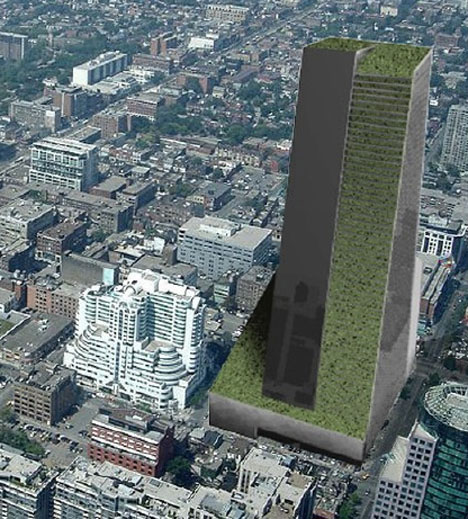
Skyscrapers of Corn?


Probably not in the short-term, considering the cost of real estate would make such a venture cost prohibitive, but interesting nonetheless.

http://www.nytimes.com/2008/07/15/science/15farm.html?_r=1&oref=slogin

This link probably won't work because this blog sucks. Anyway, it is on the nytimes.com website, so check it out.

Edited: Contributor Winston Smith has very low computer literacy.

Read More...

Is Ethanol Getting a Bum Rap?


Here's a Business Week article from May '08 that provides a level and even tempered report on the present state of ethanol.

Ethanol is taking a tumble. Once hyped as a magic brew for reducing both oil addiction and global warming, alcohol made from corn kernels is now being accused both of triggering a global food crisis and doing more ecological harm than good. Ethanol critics, ranging from environmental groups to pig farmers facing high feed prices, blame mandates from Washington and Brussels stating that billions of gallons of fuel must come from ethanol or other plant-based fuels.
There are grains of truth in this backlash, experts say. "There are bad biofuels and good biofuels," says Daniel Sperling, director of the Institute of Transportation Studies at the University of California at Davis. Corn-based ethanol ranks as mediocre. Yet it is only a minor cause of high food prices, and better biofuels are on the horizon...
http://www.businessweek.com/magazine/content/08_19/b4083060454256.htm

Read More...

Monday, July 14, 2008

I Get 70 Miles to the Gallon On This Hog


Actually, according to the intrepid CNN reporter, Bobby Staggs only gets 50-60 mpg on his custom-built tricycle moped. Considering he can pedal it and potentially get infinite mpg any time he wishes, that seems rather anemic... I found the video is good for several chuckles, however.

“We bought this for my mother about 30 years ago because she lived over on Gum Street and never had a driver’s license. She said if she had a three-wheeled bicycle, she could get back and forth to the store, so we bought it for her,” said Staggs. “It had a little motor on the front, and once she got it going, it would get her where she was going. It was fine until she turned over and broke her finger, and she never touched it again.”
I couldn't have said it better myself, Bobby. Good day to you, sir.

http://www.cnn.com/video/#/video/us/2008/07/12/ar.man.drives.tricycle.wpty

Read More...

Sunday, July 13, 2008

I want my IndyMac, IndyMac, IndyMac


You may have heard that the Feds are in the process of bailing out mortgage lender IndyMac.

California-based IndyMac, which specialized in a type of mortgage that often required minimal documents from borrowers, became the fifth U.S. bank to fail this year as a housing bust and credit crunch strain financial institutions.
This, along with the current woes of Freddie Mac and Fannie Mae, does not bode well for the housing market and the economy in general. Overall, financial stocks have been hammered in 2008.
"IndyMac is a company that was pretty much 100 percent invested in mortgage assets, and we're in a bad mortgage market, and it had no capital. It's not complicated," said Adam Compton, co-head of global financial stock research at RCM in San Francisco, which manages about $150 billion.
While we all get to chip in to cover their missteps, some of the larger account holders will certainly not be happy in the morning...
At the time of closing, IndyMac had about $1 billion of potentially uninsured deposits held by about 10,000 depositors. The FDIC said it would pay those depositors an advance dividend equal to 50 percent of the uninsured amount.
And while IndyMac is the third largest bank to ever be taken over by the FDIC, they won't be the last. Ominous clouds still loom on the horizon.

Four small banks have already been closed this year and the FDIC is hiring more staff in preparation for more failures. The agency has boosted its list of troubled banks to 90 and has said an increasing number of banks face high exposure to deteriorating conditions in commercial real estate and construction lending. Last year, just three banks failed.

"IndyMac's takeover by the FDIC is one of many to come," predicted Daniel Alpert, an investment banker at Westwood Capital in New York.

Where is Jimmy Stewart when you need him?

Read More...

Saturday, July 12, 2008

Keepin' it Langster


I just bought a bike to get more exercise, save fuel and hopefully a little cash.The process, however, to find a bike in my price range was long and daunting. I finally decided to purchase a Specialized Langster. The bike caught my eye for a number of reasons, but most notably was the quality of bike and great reviews.

I actually purchased an '07 fixed/single gear Langster and I love it so far. Light weight, fast, easy to handle and still a comfortable ride. I wanted one of '08 special edition models, but I got a close-out price that saved me around $200 for essentially the same bike, so really it was a no brainer. (I liked the Langster Chicago with the skyline graphics, but opted for the '07 red version, which appears to have some skulls near the front gears of the bike - instant street cred and an eye catcher for the ladies.)

I was slightly skeptical of the single-gear aspect, but it has not posed any problems yet. After chatting with a couple of bike gurus at a local shop, they said the real difference in riding with the single-gear is focusing on your consistency in pedaling. After riding for a couple of weeks now, I can relate to what they were saying. For instance, if I go all out, I can go really fast but cannot keep up with the pedal speed or tire quickly (usually both). However, if I just maintain an even pump for a consistent and extended period of time, my top-end speed is higher and prolonged, creating a better workout.

Here's a link to another blog that has a pretty good review of the same bike, and some pics too. I don't have a digital camera and I'm usually too fast for a traditional camera's shudder speed.

I would highly suggest this bike.

Read More...